China’s commercial vehicle camera market includes manufacturers serving trucks, buses, logistics fleets, and specialist vehicles. This guide introduces ten suppliers and considers what buyers should examine beyond a polished product page. A Commercial Vehicle Camera may capture the road ahead, monitor a cabin, or support reversing; the right configuration depends on the vehicle and its daily routes.
Virginia Tech transportation-safety researcher Dr. Richard Hanowski has studied driver behavior and commercial-vehicle safety. A practical paraphrase of the principle reflected in that research is: “Camera footage is most valuable when it helps people make safer decisions.” This is a paraphrase, not a verbatim quotation. The distinction matters. Reliable buying decisions should rest on verifiable specifications, testing, and support—not an impressive slogan.
Look closely at image clarity in rain or low light, recording reliability, storage options, installation demands, and compatibility with fleet systems. Ask suppliers for sample footage and clear warranty terms. A camera that performs well in a showroom may behave differently on a vibrating truck in winter. That detail is easy to miss.
No ranking can capture every fleet’s needs. Some suppliers may excel in hardware, while others offer stronger software or local service. Even a top-ten list has limits. Use it as a starting point, then compare evidence against your operating conditions, budget, and maintenance capacity. A little skepticism helps.
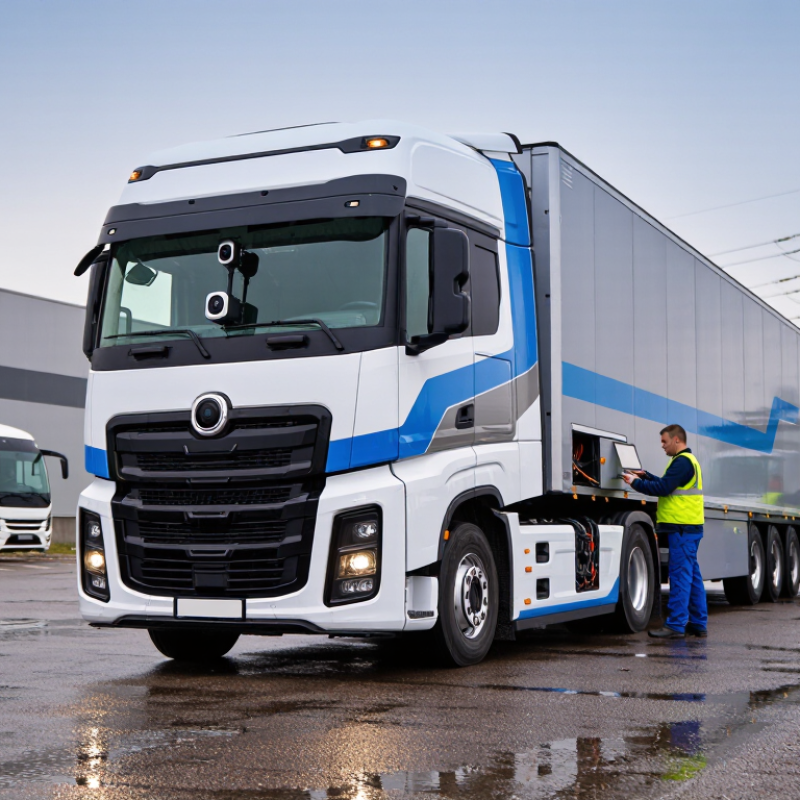
China Top 10 Commercial Vehicle Camera Suppliers?
In 2023, China sold 4.031 million commercial vehicles, according to the China Association of Automobile Manufacturers (CAAM). CAAM also reported production of 4.036 million units, with sales rising 22.1% year over year. That rebound matters. It signals a large, active market for vehicle equipment, including camera systems.
But the headline figure needs context. CAAM’s total combines trucks and buses; it does not show how many vehicles were fitted with cameras. A heavy truck on dusty roads needs durable housings, stable night vision, and clear side views. A city bus needs reliable coverage around doors and rear corners. These differences matter. Buyers should compare vibration resistance, weather sealing, low-light performance, cable durability, and service support.
Market scale alone cannot identify the top ten suppliers. Procurement teams should check real vehicle deployments, production consistency, and sample performance in heat, rain, and vibration. CAAM’s 2023 sales figures establish market context, not camera adoption or supplier quality. That distinction is easy to miss. Supplier assessments also need vehicle-level specifications and field results. Some evaluations rely too heavily on polished demonstrations. That deserves a second look.
| No. | Camera Application | Typical Vehicle Use | Common Mounting Area | Primary Function | Practical Consideration |
|---|---|---|---|---|---|
| 1 | Rear-view camera | Trucks, buses, vans, and other vehicles reversing | Rear of vehicle, often near the upper body or license-plate area | Displays the area behind the vehicle to assist the driver while reversing | Lens placement and cleaning access matter because road spray and dirt can obstruct the view |
| 2 | Side-view camera | Heavy trucks, buses, and vehicles with large side blind areas | Side mirror area or vehicle body near the cab | Provides a view along the vehicle’s side for maneuvering and lane changes | Field of view should be matched to vehicle length and camera position |
| 3 | Front-view camera | Commercial vehicles with limited visibility directly ahead | Front grille, windshield area, or cab body | Shows the near-front area that may be difficult to see from the driver’s seat | Mounting must avoid obstructing airflow, lighting, or required vehicle equipment |
| 4 | 360-degree surround-view camera | Buses, refuse vehicles, and large trucks operating in confined spaces | Multiple positions around the vehicle, commonly front, rear, and sides | Combines multiple camera views to provide a bird’s-eye-style surround display | Accurate calibration is needed to align the individual camera images |
| 5 | Cabin or driver-monitoring camera | Fleet vehicles and buses, where permitted and appropriately configured | Inside the cab, positioned to view the driver or cabin | Supports driver attention or cabin monitoring functions, depending on the system | Privacy, data access, and applicable local requirements should be considered |
| 6 | Forward-facing ADAS camera | Road-going trucks, buses, and light commercial vehicles | Behind the windshield, generally near the upper central area | Provides visual input for supported driver-assistance functions | Windshield condition, camera alignment, and recalibration can affect system performance |
| 7 | Trailer or cargo-area camera | Tractor-trailers and vehicles carrying enclosed or specialized loads | Trailer rear, trailer sides, or cargo compartment | Assists with rear visibility, coupling, loading, or cargo-area observation | Power and video connections must remain reliable across the tractor-trailer connection |
| 8 | Passenger-area camera | Public-service and passenger transport buses | Inside the vehicle, covering selected passenger areas | Supports onboard security and incident review | Coverage, retention, signage, and access controls should be defined for the operator’s use case |
| 9 | Load or equipment camera | Dump trucks, concrete mixers, service vehicles, and specialized work vehicles | Near the cargo body, working equipment, or relevant vehicle attachment | Helps the operator observe equipment or a specific work area | The camera and housing should suit exposure to vibration, dust, water, and impact risks |
| 10 | Fleet recording camera system | Delivery fleets, long-haul trucks, and commercial bus operators | One or more interior and exterior positions, connected to an in-vehicle recorder | Records selected vehicle views for fleet operations and event review | Storage capacity, footage access, connectivity, and retention policy affect system design |
Note: Camera configurations and regulatory requirements vary by vehicle type, application, and market. The CAAM market figure provides context only and does not represent camera-system shipments or supplier performance.
China sold about 4.03 million commercial vehicles in 2023. Production reached about 4.04 million units. Sales increased 22.1% year over year. That shows market activity, not camera adoption.
No. The figures combine trucks and buses. They do not show camera installations or supplier quality. Vehicle-level evidence is still needed.
Heavy trucks need durable housings and stable night vision. Clear side views also matter. Check vibration resistance, weather sealing, cable durability, and service support. Dust is unforgiving.
Buses need dependable views near doors and rear corners. The camera should remain clear during rain and frequent cleaning. A wide view helps, but blind spots may still remain.
No. More pixels cannot repair poor optics or weak image processing. A 1080p camera may show road signs clearly in daylight. A low-quality lens can still blur the edges. We sometimes overvalue resolution.
IP67 protects against dust and temporary water immersion. IP69K is more suitable for high-pressure vehicle washing. Sealing may weaken after vibration, repairs, or damaged cable glands. The rating is not permanent.
Test cameras on unlit roads with glare and low-light conditions. Ask what object size supports the claimed detection range. A stated 30-meter range may show a large object only. It may not identify a pedestrian or plate clearly.
Request footage from rain, dust, and backlit scenes. Compare the same scene across suppliers. Inspect connectors, brackets, cable glands, and software updates. Small weaknesses can create expensive maintenance later.
China’s commercial vehicle market reached approximately 4.03 million units sold in 2023, creating strong demand for reliable safety and monitoring technologies. This article presents a practical overview of the Commercial Vehicle Camera sector, covering key product categories such as ADAS cameras, blind-spot detection systems, driver monitoring systems, and 360° vision solutions. It also explains how leading domestic suppliers can be evaluated according to production scale, technical capabilities, product reliability, and original equipment manufacturer reach.
The comparison focuses on essential performance indicators, including image resolution, ingress protection, low-light and night-vision capability, detection distance, and system stability in challenging conditions. It further discusses the importance of compliance with relevant GB standards, UNECE R158 requirements, and data-security principles. By combining market context with technical and regulatory criteria, the article helps vehicle manufacturers, fleet operators, and purchasing teams make more informed decisions when selecting commercial vehicle camera solutions.

 Xiyue Electronics