China Top 10 Mini Vehicle Camera Suppliers?

Time:2026-10-11 Author:Sienna
0%

Choosing reliable suppliers requires more than browsing product photos. This introduction to China Top 10 Mini Vehicle Camera Suppliers examines manufacturers through practical purchasing criteria. It considers production experience, engineering capability, quality control, and after-sales support. The goal is not to promote the loudest brand. It is to identify suppliers that can perform consistently in real vehicle environments.

A dependable Mini Vehicle Camera should produce clear images in bright sunlight, dark parking areas, and changing weather. Its housing should resist vibration, dust, moisture, and repeated temperature changes. Connector quality also matters. A loose connection can create intermittent footage and costly service calls. We will examine sensor options, viewing angles, night vision, recording compatibility, customization, minimum order quantities, and delivery performance. Factory audits, product samples, test reports, and customer references can strengthen the evaluation. Details matter.

No supplier is perfect. Some factories offer strong pricing but limited technical support. Others provide advanced modules but require larger orders. A ranking can also change when certifications, regional requirements, or supply conditions change. That limitation deserves attention. Buyers should confirm current documentation and test samples before signing contracts. The discussion will therefore balance supplier strengths with practical risks, rather than presenting unverified claims as facts. It will also encourage compliance with applicable vehicle safety, data protection, and product quality requirements. A careful comparison helps importers, fleet operators, and vehicle manufacturers choose with greater confidence. Yet judgment remains necessary. Real performance often appears after installation, not during a sales presentation.
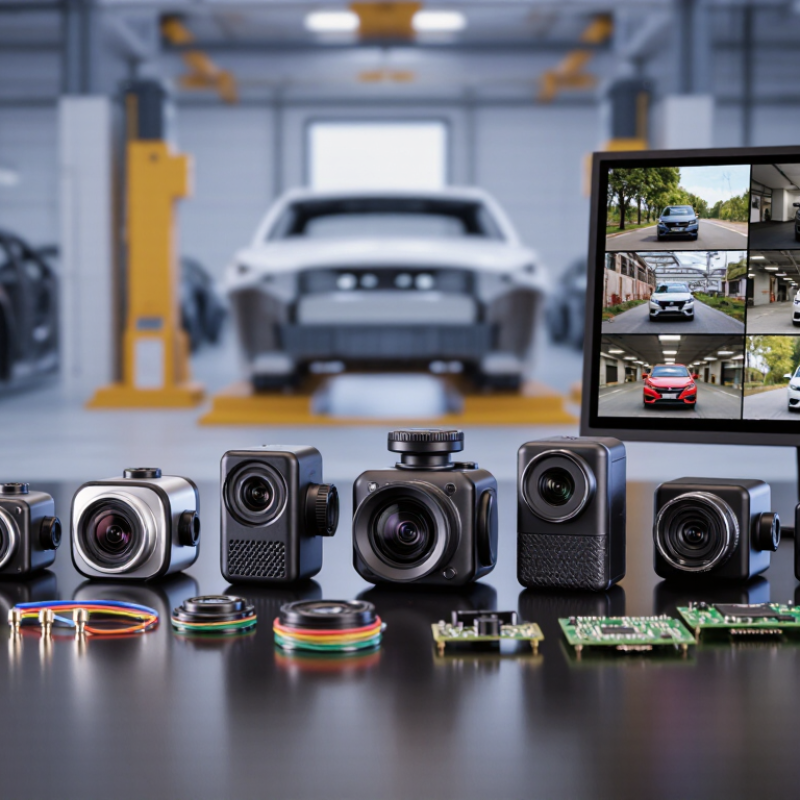
China Top 10 Mini Vehicle Camera Suppliers?

What Defines a Mini Vehicle Camera Supplier in China

What Defines a Mini Vehicle Camera Supplier in China

A mini vehicle camera supplier in China is more than a small factory with a compact product. It should design low-profile modules for parking, blind-spot, cabin, or driver-monitoring applications. OICA recorded 93.5 million motor vehicles produced globally in 2023. This scale increases demand for stable, repeatable camera supply. A capable supplier should offer sensor selection, lens calibration, waterproof housing, and controlled assembly. It should also provide traceability for every production batch.

Technical evidence matters more than attractive samples. Buyers should request optical test reports, temperature-cycle results, vibration data, and image performance at night. ISO 26262 development awareness is useful, even when the camera is not a complete safety system. UNECE vehicle safety regulations also influence camera integration in many export markets. In practical audits, a supplier with clear failure analysis often deserves more trust than one showing only impressive resolution. A low-cost sample can look excellent, yet production consistency may remain weak. This is an area worth questioning.

Tips: Check the module below 30 millimeters thick, confirm IP protection, and test image delay below 100 milliseconds. Ask for PPAP-style documents, lot traceability, and a realistic pilot-production schedule. The 2024 Yole Group automotive imaging analysis highlights continuing growth in vehicle sensing, but market forecasts are not guarantees. Supplier claims need independent testing. Even experienced buyers sometimes overlook connector durability. That small detail can create expensive field problems.

Key Criteria for Ranking China’s Top Mini Vehicle Camera Suppliers

Ranking China’s top mini vehicle camera suppliers requires more than comparing catalog prices. A reliable assessment starts with image quality, operating stability, and manufacturing evidence. Reviewers should test sample cameras in daylight, darkness, rain, and uneven parking areas. Data matters. Resolution alone can mislead.

A strong supplier should provide clear specifications for sensor performance, viewing angle, frame rate, night imaging, and power consumption. Check whether the camera remains stable during vibration, temperature changes, and long operating cycles. Housing quality also deserves attention. Sealed connectors, firm mounting points, and practical cable lengths can prevent failures during installation. Ask for inspection records, traceable production batches, and consistent sample results. A supplier with responsive engineers is often easier to evaluate than one with polished sales materials.

Ranking should also consider delivery reliability, customization ability, quality-control procedures, and after-sales support. Small variations between samples may reveal weak process control. That gap matters. Certification documents should be current, relevant, and easy to verify for the intended market. It is tempting to give the lowest price too much weight, but warranty handling and replacement speed can change the real cost. A ranking is never perfectly objective; testing conditions, vehicle structure, and buyer priorities affect the result. My own evaluation would leave room for revision after field use, because a camera that performs well indoors may struggle with glare, dust, or narrow mounting spaces.

China Top 10 Mini Vehicle Camera Suppliers? - Key Criteria for Ranking China’s Top Mini Vehicle Camera Suppliers

Rank Anonymous Supplier Profile Primary Manufacturing Region Main Camera Type Typical Resolution Ingress Protection Operating Temperature OEM/ODM Support Typical MOQ Sample Lead Time Quality-System Evidence Export Readiness Weighted Score
1 Supplier Profile A Pearl River Delta AHD / CVBS 1080p–2MP IP67 −20°C to +70°C Full 100 units 7–12 days ISO 9001; PPAP available High 92/100
2 Supplier Profile B Yangtze River Delta AHD / IP Camera 2MP–4MP IP67 −30°C to +70°C Full 200 units 10–15 days ISO 9001; traceability system High 90/100
3 Supplier Profile C Pearl River Delta USB / IP Camera 1080p–4MP IP66 −20°C to +65°C Full 100 units 7–14 days ISO 9001; incoming inspection High 88/100
4 Supplier Profile D Fujian Coastal Area AHD 1080p–2MP IP67 −20°C to +70°C Full 300 units 12–18 days ISO 9001; final inspection Medium–High 85/100
5 Supplier Profile E Pearl River Delta AHD / CVBS 720p–1080p IP66 −20°C to +60°C Full 200 units 10–15 days ISO 9001; batch testing Medium–High 83/100
6 Supplier Profile F Yangtze River Delta IP Camera 2MP–5MP IP67 −30°C to +70°C Full 500 units 15–21 days ISO 9001; reliability testing High 81/100
7 Supplier Profile G Pearl River Delta CVBS / AHD 720p–1080p IP67 −20°C to +65°C Full 300 units 12–18 days ISO 9001; process inspection Medium 79/100
8 Supplier Profile H Jiangsu Manufacturing Area USB / IP Camera 1080p–2MP IP66 −20°C to +60°C Full 500 units 15–20 days ISO 9001; sample retention Medium–High 77/100
9 Supplier Profile I Zhejiang Manufacturing Area AHD / CVBS 720p–1080p IP66 −20°C to +60°C Partial 500 units 15–25 days ISO 9001; outgoing inspection Medium 74/100
10 Supplier Profile J Chongqing and Western China CVBS 720p–1080p IP65–IP66 −20°C to +60°C Limited 1,000 units 20–30 days ISO 9001; basic batch inspection Medium 71/100
Ranking methodology: The weighted score considers image performance, durability, quality-system evidence, OEM/ODM capability, minimum order quantity, sample lead time, and export readiness. Technical specifications, certifications, MOQ, and lead times should be verified with each supplier before procurement.

Profiles of the Top 10 Chinese Mini Vehicle Camera Suppliers

China’s mini-vehicle camera sector is becoming more specialized. S&P Global Mobility’s 2024 ADAS outlook links wider camera adoption with falling sensor costs. This trend benefits compact cars, micro electric vehicles, and small commercial platforms.

The ten Chinese supplier profiles show different strengths. One focuses on waterproof rear cameras for narrow city vehicles. Another develops low-light parking modules with heated lenses. A third supplies compact surround-view systems. The fourth emphasizes electronic stability and image calibration. The fifth builds camera housings for dusty roads. The sixth offers short-range side-view units for delivery vehicles. The seventh integrates cameras with millimeter-wave radar. The eighth produces low-temperature modules for northern regions. The ninth supports private-label assembly and rapid sampling. The tenth concentrates on software tuning for small screens.

Quality differences remain significant. TechInsights has reported continued growth in vehicle camera content as basic driver-assistance features spread into lower-priced models. However, supplier selection should examine more than pixel count. Tests should cover glare, vibration, water ingress, cable fatigue, and image delay. ISO 16750 environmental testing is a useful reference, although actual vehicle use can be harsher. A camera may pass a laboratory cycle and still fog during a wet winter drive. That weakness deserves attention. Purchase teams should request sample videos, failure data, traceability records, and calibration procedures. Claims about “AI vision” also need practical proof. A clear image at night often matters more than an impressive specification sheet.

China Top 10 Mini Vehicle Camera Suppliers

Non-brand profile overview based on commonly disclosed product and manufacturing capabilities in the Chinese mini vehicle camera supply sector.

The chart summarizes recurring capabilities found in supplier profiles, including OEM/ODM support, HD video formats, weather-resistant housing, night vision, wide-angle coverage, and customized cable or connector options. Values represent the number of supplier profiles associated with each capability and are presented without company or brand names.

Product Types, Technologies, and Industry Applications

China Top 10 Mini Vehicle Camera Suppliers? Product Types, Technologies, and Industry Applications

China’s mini-vehicle camera market is expanding with compact electric cars, delivery carts, scooters, and agricultural vehicles. The China Association of Automobile Manufacturers reported 31.44 million vehicle sales in 2024, including 12.87 million new-energy vehicles. This scale supports a wide supplier base, but production volume alone proves little.

The leading ten suppliers should be compared by product coverage and test evidence. Common products include rear-view cameras, side-view units, 360-degree surround systems, cabin cameras, and digital mirror modules. Technologies range from analog high-definition links to GMSL, Ethernet, HDR imaging, infrared night vision, and embedded driver monitoring. A useful module needs low-light clarity, stable color, controlled lens distortion, and at least IP67 protection for exposed mounting positions. Resolution is not everything.

Think beyond parking.

In compact vehicles, cameras support reversing, blind-spot alerts, pedestrian detection, fleet supervision, and battery-swapping access control. The World Health Organization’s Global Status Report on Road Safety 2023 estimates 1.19 million annual road deaths worldwide, reinforcing the value of dependable visual assistance. The European Union’s General Safety Regulation also requires more safety functions in new vehicles, increasing demand for validated camera systems.

During supplier audits, buyers should inspect EMC results, temperature cycling, vibration tests, calibration procedures, and failure-rate records. A camera may look sharp on a showroom monitor, yet perform poorly through rain, dust, or a dirty lens. That gap deserves more attention.

How to Select a Reliable Mini Vehicle Camera Supplier in China

Selecting a reliable mini vehicle camera supplier in China requires more than comparing prices from a top-ten list. Check the supplier’s manufacturing experience, technical team, and quality records. Ask for clear details about resolution, night vision, viewing angle, storage, and operating temperature. A dependable supplier should provide real test reports, not only polished product images.

Request a sample before placing a large order. Test it inside a moving vehicle, on rough roads, and in low light. Check whether the image remains stable when the camera vibrates. Confirm compatibility with 12V or 24V vehicle systems. Review the lens housing, cable length, waterproof rating, and installation method. Small details matter.

Ask how the supplier manages incoming materials, assembly checks, and final inspection. A factory should explain its warranty process and replacement times in writing. Verify business licenses, export experience, product certifications, and lawful data-handling practices for recorded footage. Avoid suppliers who refuse factory evidence or give vague answers. Price is only one factor. A cheaper camera may create higher installation and maintenance costs. One practical limitation remains: sample performance may differ from mass production. Use a written specification, approved sample, and batch inspection plan to reduce that risk. Supplier communication also deserves testing; delayed replies during negotiation may become serious after delivery.

FAQS

What should a mini vehicle camera supplier provide?

A capable supplier should offer compact modules for parking, blind spots, cabins, or driver monitoring. It should support sensor selection, lens calibration, waterproof housing, and controlled assembly. Batch traceability matters.

How can buyers judge image quality?

Test cameras in daylight, darkness, rain, glare, and uneven parking areas. Check night clarity, viewing angle, frame rate, power use, and image delay. Resolution alone can mislead.

What physical details deserve careful inspection?

Check whether the module is below 30 millimeters thick. Inspect sealed connectors, mounting points, cable length, and housing strength. Small connector weaknesses can create expensive field problems.

Which environmental tests are useful?

Request temperature-cycle, vibration, water-ingress, and cable-fatigue results. Testing should reflect dust, cold weather, wet roads, and long operating hours. Laboratory success is not everything.

What documents should a supplier share?

Ask for optical reports, inspection records, calibration procedures, and failure-analysis reports. Lot traceability and PPAP-style documents can reveal process discipline. Missing records deserve questions.

How should buyers compare different suppliers?

Compare image stability, customization, delivery reliability, quality control, and support response. Do not rank suppliers by catalog price alone. Replacement speed affects the real cost.

What does a useful pilot-production plan include?

It should show sample approval, production timing, inspection steps, and delivery quantities. Buyers should test several batches, not just one attractive sample. Samples can hide inconsistency.

Can advanced image features guarantee better performance?

No. Claims about intelligent vision need practical evidence from night driving and difficult lighting. A clear image may matter more than a complicated specification. I would keep the ranking open to revision.

Conclusion

This article provides a practical overview of China’s Mini Vehicle Camera supplier landscape, explaining what defines a capable supplier and which factors matter when comparing manufacturers. It examines production capacity, product quality, research and development, customization services, certification support, delivery reliability, and after-sales communication. Based on these criteria, the article presents profiles of ten representative Chinese suppliers without focusing on brand promotion, helping readers understand the different strengths and service models available in the market.

It also introduces common product types, including compact backup cameras, side-view cameras, cabin monitoring cameras, and multi-camera systems, along with technologies such as high-definition imaging, night vision, wide-angle lenses, waterproof design, and intelligent detection. Applications across passenger vehicles, commercial fleets, agricultural machinery, logistics equipment, and specialized transport are discussed. The final section offers practical guidance for selecting a reliable supplier by evaluating samples, technical specifications, quality controls, customization capabilities, compliance documentation, pricing transparency, production timelines, and long-term support.


Sienna

Sienna

Sienna is a skilled marketing professional with a deep expertise in our company’s core products and services. With a passion for innovation and detail, she plays a pivotal role in crafting insightful blog posts that not only highlight the unique features of our offerings but also provide valuable......